Face of Christ
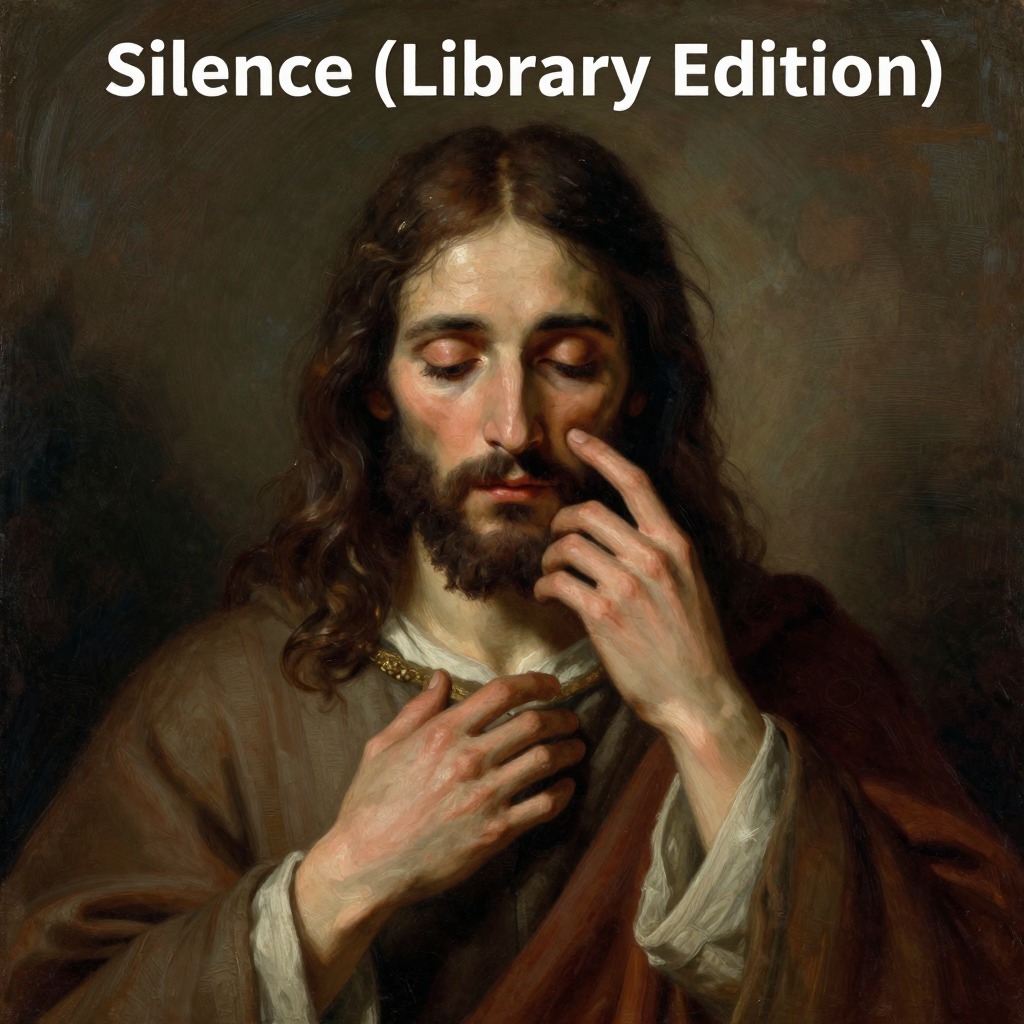
The Face of Christ is the most intimate and contested symbol in Shusaku Endo's Silence, the object of Sebastian Rodrigues' lifelong devotion and the site of his ultimate spiritual crisis. From his seminary days in Portugal to his final years as a prisoner in Japan, Rodrigues carries an idealized image of Christ's face—a face of vigor, beauty, and gentle authority that he has "clasped to his breast just like the person who romantically idealises the countenance of one he loves" . This face is not merely a religious icon but the organizing principle of his identity as a priest and missionary, the source of his courage, and the silent interlocutor in his moments of solitude and fear. The novel traces the gradual, agonizing transformation of this face from a triumphant king to a trampled, exhausted figure who speaks not from glory but from shared suffering, culminating in Rodrigues' act of trampling the fumie—an act that paradoxically becomes the most profound encounter with Christ in the entire narrative.
Idealization and the Devotional Image
From his earliest memories, Rodrigues has been fascinated by the face of Christ precisely because the Gospels leave it undescribed, allowing his imagination to fill the void with an idealized countenance . As a seminarian, he was captivated by the face in the painting preserved at Borgo San Sepulchro, which depicts Christ with one foot on the sepulchre, holding a crucifix, and bearing "the expression of encouragement it had when he commanded his disciples three times, 'Feed my lambs'" . This is a face "filled with vigour and strength," a face that Rodrigues loves "just like a man fascinated by the face of his beloved" . This idealized image sustains him through the long sea voyage to Japan, the hardships of hiding in the mountains of Tomogi, and the early days of his secret ministry. When he baptizes the first baby in Japan, he reflects that Christ did not die for the good and beautiful but for the miserable and corrupt, and this realization deepens his attachment to the face that embodies such sacrificial love . Even in the prison where he is first confined, the face of Christ appears to him with "clear blue eyes" that are "gentle with compassion," and he hears the answer, "I will not forsake you" .
The Face in Suffering and Silence
As Rodrigues' mission unravels—as Mokichi and Ichizo are martyred by drowning, as the one-eyed Christian is beheaded in the prison courtyard, as Garrpe drowns while trying to save three Christians—the face of Christ begins to change. The silence of God, which Rodrigues experiences as the sea's "monotonous sound" and the "depressing silence" that follows the martyrdoms, becomes an unbearable weight . He recalls the Stations of the Cross and the face of Christ "as he carried his cross," which gives him life even in captivity . Yet the face he now envisions is no longer the triumphant king but the suffering servant. On the night before his own apostasy, alone in a urine-soaked cell, Rodrigues hears the groaning of Christians suspended in the pit and realizes that he has mistaken their moans for the snoring of a guard . In this moment of profound shame, the face of Christ appears to him not as a distant ideal but as a presence that shares his anguish: "When you suffer, I suffer with you. To the end I am close to you" .
The Trampling and the New Face
The climactic transformation occurs when Rodrigues is brought before the fumie—a copper plaque bearing the image of Christ, worn down and hollowed by the feet of countless apostates. The face he sees is not the beautiful, vigorous face of his devotions but a "sunken and utterly exhausted" face, "concave, worn down with the constant treading" . This face, which has been trampled by so many Japanese Christians, looks up at him "in sorrow" and speaks: "Trample! Trample! I more than anyone know of the pain in your foot. Trample! It was to be trampled on by men that I was born into this world. It was to share men's pain that I carried my cross" . Rodrigues places his foot on the face he has loved all his life, and in that act, the cock crows . This is the novel's most radical theological reversal: the Christ who commands apostasy is not a false Christ or a demonic deception but the true Christ who identifies so completely with human suffering that he wills his own desecration for the sake of love. Rodrigues later reflects that this Christ is "different from the God that is preached in the Church" , a God who does not remain silent but suffers beside the weak.
The Face After Apostasy
In the years that follow, living under the Japanese name Okada San'emon, Rodrigues continues to see the face of Christ. At night, "as always happened at night, the face of Christ rose up in his heart. It was the face of the man upon whom he had trampled" . When Kichijiro returns to confess his sins, Rodrigues hears the voice of Christ speaking from the fumie: "I did not say that. Just as I told you to step on the plaque, so I told Judas to do what he was going to do. For Judas was in anguish as you are now" . The face that once commanded him to trample now reveals that Judas, too, was loved and understood. Rodrigues' final understanding is that he loves Christ "now in a different way from before" and that "everything that had taken place until now had been necessary to bring him to this love" . The face of Christ has been stripped of its Hellenistic, triumphant majesty and revealed as a face that is present in the most degraded and abandoned—a face that does not demand heroic martyrdom but accepts the weakness and failure of those who love him.
Thematic Significance: The Swamp and the Butterfly
The transformation of the Face of Christ in Silence mirrors the novel's central thesis about the failure of Western Christianity to take root in Japan. Just as Ferreira argues that the Japanese have twisted the Christian God into something unrecognizable—"like a butterfly caught in a spider's web" that retains only the external form while the blood and flesh are gone —so Rodrigues' idealized face of Christ must be broken and remade in the crucible of Japanese suffering. The face that emerges from this process is not the triumphant Christ of European art but a Christ who is trampled, exhausted, and silent—a Christ who can be loved by the weak and the apostate. This is the "new strain" in the symphony of Catholicism that Endo seeks, a strain that corresponds to "Japan's mud swamp" . The Face of Christ, in its final form, is not a symbol of victory but of presence in the midst of abandonment, a face that does not break the silence but shares it.